What Is Gacha? Japan's Capsule-Toy Culture Explained
Gacha — also called gachapon or gacha-gacha — is a Japanese capsule-toy machine: you insert a coin, turn the handle, and one random item from the set on display drops out in a sealed capsule. The word now also names the same random-draw mechanic in video games.
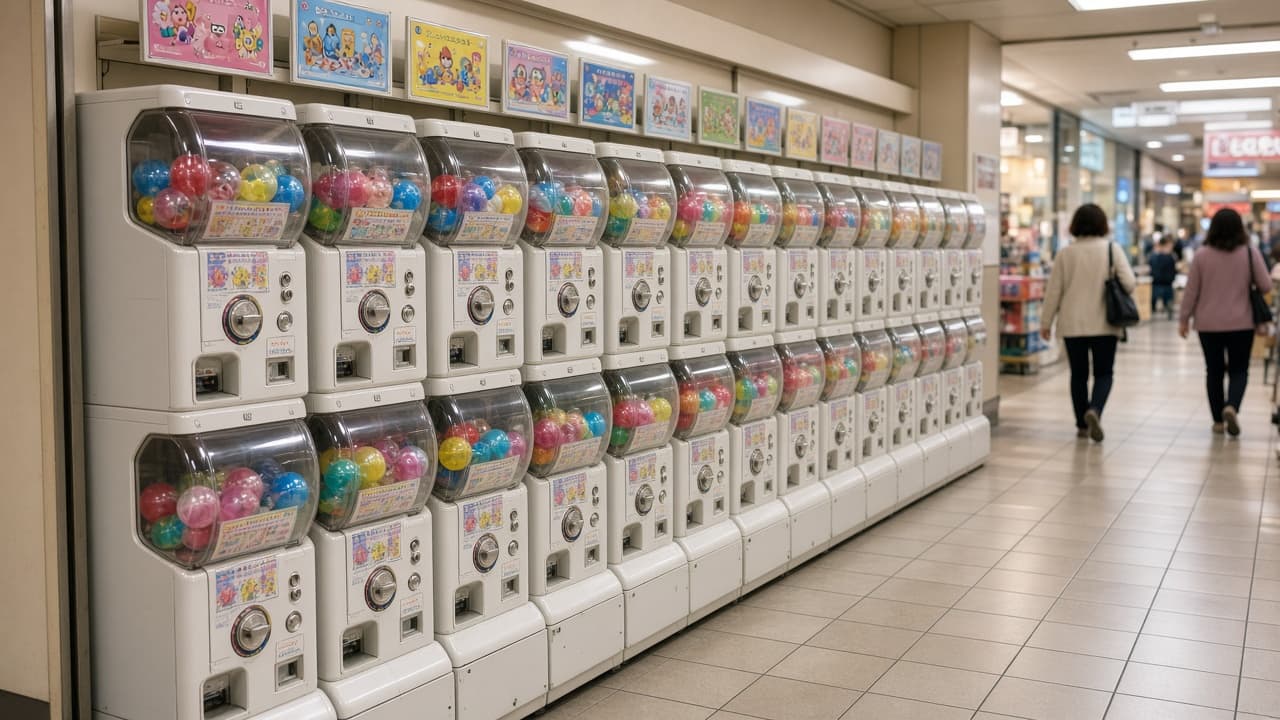
What is “gacha-gacha” in Japan?
In Japan, rows of capsule machines are found in shopping centers, arcades, stations, electronics districts, airports, and specialist stores. Each machine is dedicated to one collection. Its display shows the figures or objects that may be inside, but the player cannot choose the exact capsule.
The machines are commonly called gacha-gacha (ガチャガチャ), gachapon (ガチャポン), or gashapon (ガシャポン). Usage varies, and brand names also influenced which form people recognize. Outside Japan, the shorter word gacha became the usual name for both the machines and the random-draw mechanic.
Where does the word “gacha” come from?
The name is sound symbolism. Gacha suggests the clattering sound and feel of turning the crank. Pon suggests the capsule dropping into the tray. Together, the words imitate the experience: turn the handle, hear the mechanism move, then collect the capsule.
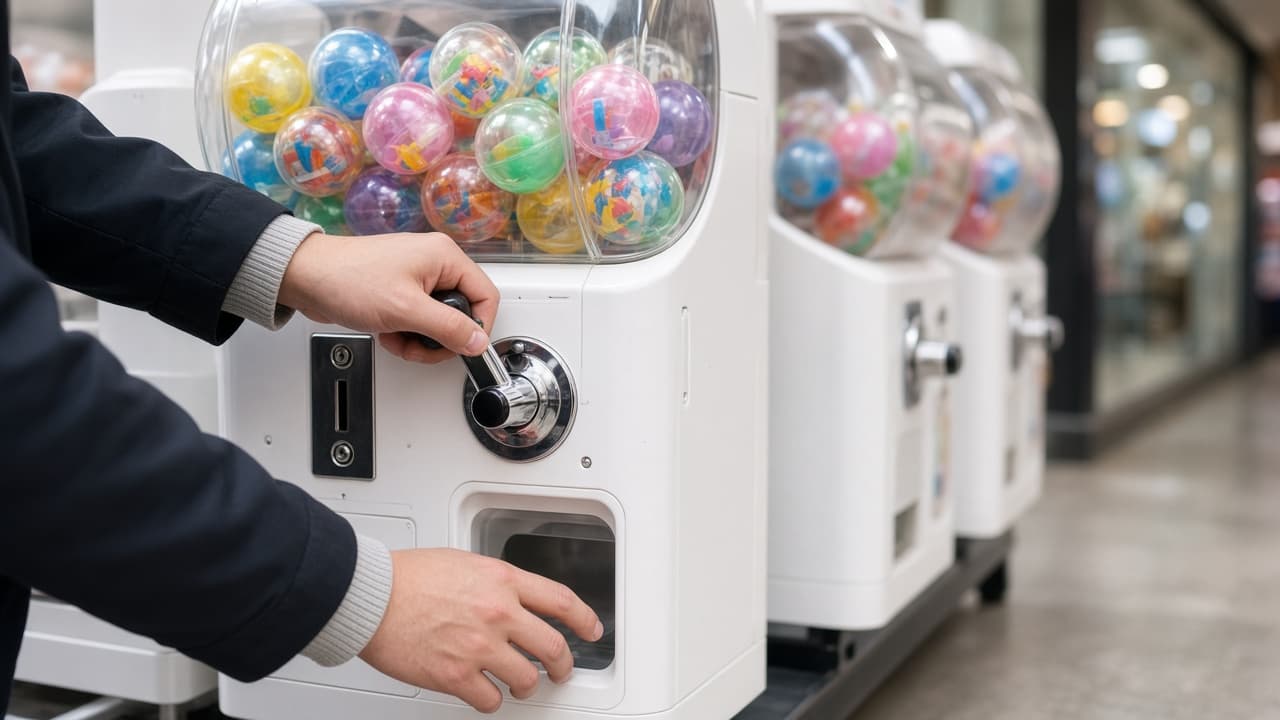
How does a Japanese capsule machine work?
- Choose a collection. The display tells you the theme, price, and possible items.
- Insert the required coins. Traditional machines use coins, while some modern stores also use tokens or cashless payment.
- Turn the handle. The mechanism releases one capsule without letting you select it.
- Open the capsule. Inside is one item from the set, often with a small paper guide showing the complete collection.
What can be inside a gacha capsule?
The classic prize is a miniature toy, but Japanese gacha covers an unusually wide range: character figures, animals, food miniatures, keychains, model parts, badges, stationery, and tiny versions of ordinary household objects. Some collections are cute, some are precise scale models, and some are deliberately strange.
A set usually includes several designs. That makes a single capsule enjoyable on its own while giving collectors a reason to look for the rest. Duplicates can happen; exchanging them with friends is part of the culture around collecting.
Why did gacha become so popular?
A small, complete surprise
The result is hidden, but the possible collection is visible. You know the theme while preserving the reveal.
Collectible by design
Each item belongs to a set, so one capsule can become the start of a collection rather than an isolated purchase.
Easy to understand
No instructions are needed beyond inserting a coin and turning a handle. The result arrives within seconds.
Endless subjects
New collections can be made for famous characters, local places, animals, art, food, or almost any niche interest.
How gacha moved from capsules to games
Video games borrowed the same structure: the player performs a draw and receives one result from a pool of characters, cards, or items. Digital games added rarity levels, animations, limited collections, and rewards that can be used inside the game. This is why the English word gacha now often means a game system rather than a vending machine.
The important distinction is that gacha describes the random selection mechanic, not one payment model. Physical machines normally cost money, many mobile games sell draws, and other versions may provide free draws.
Gacha, blind boxes, and loot boxes
These formats share the pleasure of an unknown result, but they are not identical. A capsule machine dispenses a physical object immediately. A blind box is a sealed product selected from a shelf. A digital loot box exists inside a game. “Gacha” usually emphasizes the act of drawing one random result from a named collection.
What does gacha mean in BTC GACHA?
BTC GACHA adapts the reveal of a Japanese capsule machine into a free Bitcoin faucet. Instead of inserting a coin and receiving a plastic capsule, you draw a digital card. A winning card gives you sats, the smallest unit of Bitcoin, and a collectible monster card.
There is no purchase, deposit, or traditional account registration. Advertising funds the rewards, and the sats you collect can be redeemed over the Lightning Network. Read how the free Bitcoin gacha works for the game-specific details.
Frequently asked questions
What does gacha mean?
Gacha is the shortened international name for Japanese capsule-toy vending machines and the random-draw idea they inspired.
Are gacha, gachapon, and gashapon the same?
In everyday English they often refer to the same capsule-toy idea. Gacha is the broad shorthand, while gachapon and gashapon are common Japanese names associated with the crank and drop sounds of the machine.
Is every gacha a paid game?
No. Physical capsule machines normally take a coin, and many digital gacha games sell draws, but the mechanic can also be free. BTC GACHA does not require a purchase or deposit.
What is inside a Japanese gacha capsule?
The capsule may contain a miniature figure, charm, keychain, model, practical novelty, or another item from the collection shown on the machine.
This article describes the general Japanese capsule-toy tradition and how the word is used internationally. Machine names, payment methods, and product styles vary by operator and location.
Try a free gacha drawFree to play. No sign-up, purchase, or deposit.